Manufacturing is one of the most operationally demanding industries out there. You're dealing with tight deadlines, complex supply chains, shifting customer demands, and a shop floor that never really stops. And somewhere in the middle of all that chaos, critical data slips through the cracks.
Delayed shipments, inventory mismatches, sales teams working off outdated spreadsheets, production managers making calls without real numbers; these aren't rare incidents. They're everyday realities for manufacturers who haven't yet made the shift to a unified digital system.
That's exactly where Manufacturing ERP Systems come in. ERP is no longer just an IT investment. It's a business decision that directly impacts your bottom line. In this blog, we'll break down how ERP software eliminates operational bottlenecks, brings your teams onto the same page, and most importantly, delivers measurable return on investment.
What Is Manufacturing ERP Software?
At its core, Manufacturing ERP Software is an integrated platform that connects every department in your business, sales, inventory, production, procurement, finance, into one single source of truth. Instead of each team running separate tools and fragmented data, everyone works off the same system in real time.
Think of it as the central nervous system of your manufacturing business. When a sales order is placed, inventory levels adjust automatically. When raw materials run low, procurement gets flagged. When production schedules shift, finance sees the impact immediately. Nothing falls through the gaps.
Now, there's a big difference between a generic ERP and a customized one. A generic ERP might give you the basics, but manufacturing businesses have unique workflows, BOMs, work orders, machine scheduling, quality checks. A Customized Manufacturing ERP is built around your actual processes, not the other way around.
Why ROI Matters in Industrial Businesses
ROI in manufacturing isn't just about cutting costs; it's about making every rupee (or dollar) you spend working harder. The biggest cost drivers in industrial businesses are predictable: labor inefficiencies, excess inventory, production delays, billing errors, and rework caused by miscommunication.
When you tighten up those areas, even incrementally, the cumulative financial impact is significant. A 10% reduction in excess inventory, faster order fulfilment, fewer billing disputes; each one adds directly to profitability. ERP software creates a structure that makes improvements possible and sustainable.
Key Challenges That Impact ROI
Before we talk about solutions, let's call out the real problems that eat into profitability in most manufacturing companies:
- Inefficient sales tracking: Quotes take too long, follow-ups are missed, and no one knows the true pipeline status without asking five people.
- Lack of real-time data: Decisions are being made on yesterday's numbers. By the time reports are ready, the situation has already changed.
- Poor inter-department coordination: Sales promises something production can't deliver. Procurement orders what's already in stock. Finance closes books with incomplete data.
- Manual processes and human error: Data entry mistakes, duplicate records, missed invoices, all add up to real financial losses and damaged customer relationships.
These aren't just operational inconveniences. Each one directly reduces your margins and your ability to scale.
How ERP Systems Improve ROI
This is where Manufacturing ERP Systems truly earn their place. Let's go through the specific ways ERP drives measurable ROI.
Improved Operational Efficiency
Automation is the single biggest lever ERP gives you. Repetitive tasks, generating purchase orders, updating stock levels, triggering production work orders, sending invoices, all happen automatically based on predefined rules. Your team stops doing data entry and starts doing actual work. That shift alone can reclaim hours of productive time every single day.
Real-Time Data Visibility
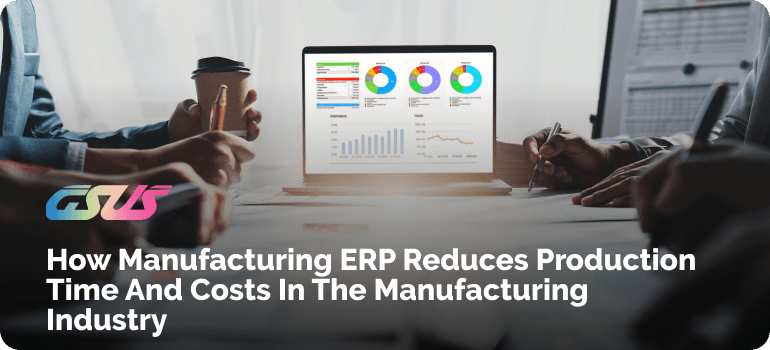
When your leadership team can pull up live dashboards showing production status, inventory levels, order pipelines, and financial performance, decision-making becomes faster and more accurate. No more waiting for end-of-month reports to understand what's happening in your business. With real-time visibility, you can course-correct before small issues become expensive problems.
Inventory Optimization
Overstocking ties up working capital. Stockouts delay production and damage customer trust. A well-implemented ERP finds that middle ground by tracking consumption patterns, flagging reorder points, and enabling demand-based planning. The result? Leaner inventory, fewer write-offs, and production lines that rarely stop for want of materials.
Faster Order Processing
From order receipt to delivery, ERP software compresses lead times significantly. Orders flow automatically into production schedules; materials are reserved, logistics are planned, all without manual hand-offs between teams. Customers get accurate delivery timelines, and you meet them. That reliability is something customers remember and come back for.
Enhanced Sales Performance
CRM integration within Manufacturing ERP is often undervalued. When your sales team can see inventory availability, production capacity, and customer history all in one place, they quote faster, follow up on time, and close more deals. Pipeline visibility also means management can spot bottlenecks early and take action.
Cost Reduction
Fewer manual errors mean fewer costly corrections. Streamlined procurement reduces over-purchasing. Automated invoicing speeds up cash collection. Across every department, ERP chips away at operational waste, and those savings compound over time.
Key Features of Manufacturing ERP Systems
Not all ERP solutions are created equally. When evaluating Manufacturing ERP for your business, here are the core features that move the needle:
- Sales pipeline management: Full visibility from lead to invoice, with real-time status updates.
- Real-time inventory tracking: Know exactly what's in stock, what's committed, and what needs to be ordered, at any moment.
- Automated order processing: Orders trigger production, procurement, and logistics without manual intervention.
- CRM integration: Connect customer interactions with operational data for smarter, faster sales execution.
- Reporting & analytics dashboards: Customizable dashboards that give leaders the KPIs they need to manage the business.
Implementation Approach That Actually Works
One of the biggest reasons ERP implementations fail isn't the software; it's the approach. Successful implementation follows a clear process:
- Business requirement discovery: Before any configuration begins, understanding your current workflows, pain points, and goals is non-negotiable.
- Customization over configuration: The ERP should adapt to how you work, not force you to change processes that already function well.
- Integration with existing systems: Whether it's a legacy accounting tool or a third-party logistics platform, a good ERP should connect, not replace, what already works.
- Training and change management: Technology is only as powerful as the people using it. Structured onboarding and ongoing support determine long-term adoption.
Before vs After ERP Implementation
The difference between a pre-ERP and post-ERP operation is stark. Before ERP: sales teams are working off outdated spreadsheets, inventory counts are done manually (and often wrong), production schedules are communicated over email or WhatsApp, and finance is chasing data from three departments to close the month.
After ERP: a sales order placed at 10 AM has already triggered a production work order, updated available inventory, and flagged a procurement need, all by 10:01 AM. Finance can see revenue projections in real time. Management can make decisions based on facts, not gut feel.
That's not an exaggeration. That's what a well-implemented Manufacturing ERP looks like in practice.
Real Business Benefits You Can Expect
Businesses that implement ERP software thoughtfully typically see improvements across four key areas: operational efficiency improves as teams spend less time on admin and more on value-adding tasks; conversion rates rise because sales teams have better information and faster response times; decision-making accelerates when data is live and accessible; and customer satisfaction increases as delivery reliability and communication improve. These aren't abstract benefits; they translate directly into revenue and margin.
Choosing the Right ERP Platform - Why It Matters
The ERP market is crowded, and not every platform suits a manufacturing business. The right choice should offer flexibility, industry-specific modules, a clear upgrade path, and a strong implementation of the ecosystem.
Odoo stands out as one of the most powerful and adaptable ERP platforms available today, particularly for mid-sized manufacturers. It covers everything from CRM and sales to inventory, manufacturing, purchasing, and accounting, all within a single modular system. You can start with what you need and scale as your business grows.
At GSUS, we're proud to be an Odoo Silver Partner, which means we don't just implement the software; we understand the platform deeply. We work with manufacturing companies to map their workflows, customize Odoo to fit their specific needs, and ensure the rollout is smooth, adopted, and deliver results from day one.
If you're evaluating Manufacturing ERP and want a partner who has done this before, GSUS brings both the technical expertise and the industrial business understanding to get it right.
Key Takeaways
- ERP is a long-term investment: The ROI grows over time as adoption deepens and processes mature.
- Customization is non-negotiable: Off-the-shelf implementations rarely deliver full value. Your ERP needs to fit your business.
- The right implementation partner matters: Technology is only half the equation. Working with experienced partners like GSUS, who understand both ERP and manufacturing, is what separates successful deployments from failed ones.
Conclusion
Manufacturing is a competitive game. Margins are tight, customer expectations are rising, and the businesses that win are the ones that run operationally tight ships. Manufacturing ERP Systems aren't just software, they're the infrastructure that makes operational excellence possible.
When implemented well, ERP software transforms how a manufacturing business operates, reducing waste, speeding up processes, and giving leadership the visibility they need to make better decisions, faster. The ROI is real, and for most businesses, it becomes apparent within the first year.
If you're ready to explore what the right Manufacturing ERP can do for your business, we'd love to have that conversation. Reach out to the team at GSUS, let's figure out together what your operation needs to grow.