Somewhere in your company right now, someone is probably pulling numbers from three different files, cross-checking them against a WhatsApp message, and hoping it all adds up before the next meeting. It's not laziness or bad management. It's just what happens when a business grows faster than the systems meant to hold it together.
That was exactly the situation at Delta Trade link, a company with 25 years of hard-earned reputation, loyal customers, beloved brands, and an operation that had quietly outpaced every tool it was running on.
This is the story of how they changed that.
A business built on trust and a lot of manual effort
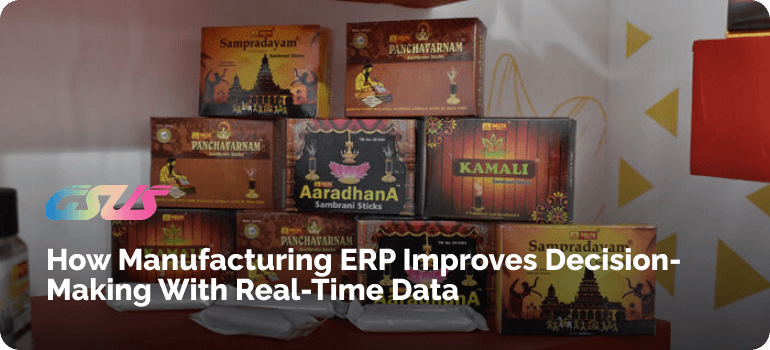
Deltas Trade Link, Founded in 1999 by Mr Veerachamy Senthilkumar, has grown into one of India's leading manufacturers of Sambrani and devotional products, incense sticks, jumbo cups, and mini cups, serving customers across the country under four well-known brands.
Twenty-five years is a long time to build something. And Delta Trade link built it the way most honest manufacturing businesses do, through product quality, fair pricing, and a genuine commitment to the people who buy from them. What started as a small local operation grew into a business that now serves customers across India.
But growth brings its own complications. And by the time Delta Trade link reached out to us, the complications had piled up to the point that they were affecting day-to-day operations in a very real sense.
The problem with patching things together
Delta Trade link’s setup wasn't unusual for a growing Indian manufacturer. They had Tally handling accounts. Spreadsheets manage inventory, purchases, and customer orders. WhatsApp and phone calls hold the teams together. Each of these tools did its job reasonably well in isolation, but in isolation is exactly the problem.
Here's what "didn't work" looked like in practice:
Reports took 30 minutes. Getting a basic management report meant someone physically opening multiple files, pulling figures by hand, and praying nothing had slipped through the cracks since the last update.
Sales didn't know what was in stock. There was no live link between what a customer wanted and what the warehouse actually had. Commitments were made on assumptions, not facts.
Accounts had to chase operations. Before closing the books each period, the finance team would go around collecting numbers from other departments, a time-consuming process that also introduced delay and error.
Team coordination had no trail. Decisions were made over WhatsApp. Follow-ups were missed. Nobody had a clear record of what was agreed, when, or by whom.
Data entry errors compounded quietly. Manual input in one place led to wrong figures somewhere downstream, the kind of problem that only surfaces when it's already done some damage.
None of these individually would bring a business down. But together, they were a constant tax on everyone's time, attention, and decision-making. The business had clearly grown beyond its tools. Something had to change.
This isn't just a Delta Trade link story
It's worth pausing here, because if you run or manage a manufacturing business in India, there's a decent chance you recognise this picture. Tally and spreadsheets are the default starting point for most small and mid-sized manufacturers. It's affordable, familiar, and gets the job done in the early years.
The problem is that nobody ever sits down and decides, "Today, we've officially outgrown our tools." It happens gradually. One more spreadsheet, one more WhatsApp group, one more manual workaround, until the workarounds are themselves the problem. By the time it becomes painful enough to address, a lot of invisible costs have already been paid in lost time, bad data, and missed decisions.
Delta Trade link recognised it. That's what brought them to GSUS.
How GSUS approached it, no ready-made answers
The GSUS team didn't walk in with a solution already prepared. That would have been the wrong move, and they knew it. Every manufacturing business has its own quirks, its own way of raising a purchase order, its own informal shortcuts, its own definition of "closing the day." Imposing a generic system on a specific operation is how ERP projects go wrong.
Instead, they started by talking to the people who actually do the work. Sales staff. Warehouse teams. Accounts. Management. Not to gather requirements in the formal sense, but to genuinely understand where things were breaking down, and why.
Talked to every team — not just management, but the people on the floor who live with the daily friction.
Mapped the real workflows — including the informal ones, the WhatsApp shortcut, and the Excel file that only one person maintains.
Documented everything clearly — all current workflows, gaps, and inefficiencies compiled into a requirements document.
Walked it back to the team — so Delta Trade link could review, correct, and sign off before a single line of configuration was written.
This alignment step, getting everyone on the same page about what exists, what's broken, and what the system needs to do, is where a lot of implementations skip ahead too quickly. GSUS didn't.
GSUS, We start with your business, not with software.
GSUS is a Certified Odoo implementation partner. Before recommending any solution, our team maps your actual operations, not the ideal version on paper. The result is an ERP that fits how your business works, not one you have to reshape your business around. If your manufacturing operation is starting to feel the strain of disconnected systems, we'd like to talk.
Why Odoo, and why it made sense here
Once the requirements were clear, GSUS recommended Odoo. The reasoning wasn't complicated: Delta Trade link didn't need more tools. They needed fewer — connected into one.
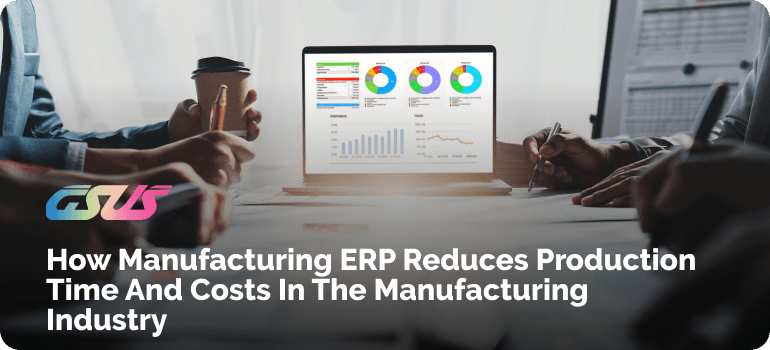
Odoo is a fully integrated, modular ERP platform. Sales, purchase, inventory, accounting, and team management all run as a single connected system. When a sale is confirmed, inventory updates automatically. When procurement raises a purchase order, accounts can see it instantly. Reports that previously required 30 minutes of manual data gathering now generate in seconds, from live data, not last week's export.
For a business like Delta Trade link, where the core problem was disconnection between departments, Odoo solved the right problem in the right way. It's also built to scale, so as the business grows, the system scales with it rather than becoming the next bottleneck.
How the implementation actually worked
Going live on a new ERP can be disruptive if it's handled poorly, a "big bang" switch where everything changes overnight, and the team is left learning under pressure. GSUS took a deliberately different approach.
Each module was configured and brought live in a structured sequence. One area at a time. The team got comfortable with each section before the next was introduced. Every step was tested using real business data, actual Delta Trade link transactions and scenarios, not generic demo data that means nothing to the people who have to use the system every day.
Existing data from Tally and spreadsheets was carefully migrated into Odoo so nothing was lost in the transition. By the time the system went live, the Delta Trade link team already knew it, because they had been part of testing and validating it throughout the entire process.
That's not an accident. That's how you get adoption instead of resistance.
What actually changed, before and after
The shift was immediate in some areas and structural in others. Here's the honest comparison:
| Before Odoo ERP | After Odoo ERP |
|---|---|
| Reports took 30 minutes of manual data gathering from multiple files | Reports generate in seconds from live, real-time data |
| Stock levels checked manually; frequent mismatches between files and reality | Inventory visible in real time; automatic updates when orders are confirmed |
| Accounts chased operations each period to collect numbers before closing books | Financial data flows automatically from all departments; no manual chasing |
| Team coordination over WhatsApp, no record, no accountability, follow-ups missed | Tasks tracked and managed within the system; full visibility, clear ownership |
| Customer order history and outstanding balances scattered across systems | All customer data, orders, payments, history, in one place, accessible instantly |
| Data entry in one system had to be re-entered elsewhere, creating error risk | Single data entry flows across all connected modules automatically |
The bigger shift: from managing data to using it
There's a difference between a business that spends its energy collecting information and one that actually uses it. Before Odoo, Delta Trade link was doing the former. A lot of effort, people's time, attention, mental load, was going into just knowing what was happening: what's in stock, what's owed, what's in progress.
After the implementation, that energy shifted. The data is just there, current, accurate, and accessible to whoever needs it. Management can pull any report without asking anyone for help. Stock levels don't require a warehouse walk. Customer outstanding balances don't require a call to accounts. Purchase history is visible the moment someone needs it.
- 30s Report generation - Down from 30 minutes of manual work
- 1 Unified system - Replacing Tally + multiple spreadsheets
- Live Inventory data - Real-time visibility across all stock
- Zero Data re-entry - Single entry flows across all modules
Delta Trade link went from a business held together by spreadsheets to one running on a connected, intelligent platform. The team now spends less time managing data and more time actually using it, to make better decisions, serve customers faster, and run operations with a clarity that simply wasn't possible before.
That's the real return on an ERP investment. Not just efficiency. A fundamentally different way of running the business.
Is your manufacturing business running on the wrong tools?
If the Delta Trade link story feels familiar, departments not talking to each other, reports that take too long, decisions made on outdated data, GSUS can help you take a clear-eyed look at where you are and what's actually needed. As certified Odoo partners, we've done this across manufacturing businesses of different sizes and types. We know what works and what doesn't, and we're straightforward about both.
Conclusion
Delta Trade link’s story isn't about technology. It's about a business that had built something real over 25 years and finally gave it an operational foundation to match. The brands, the customer relationships, the product quality, all of that was already there. What was missing was the infrastructure to run it efficiently at scale.
If your manufacturing operation is at a similar point, functional but fragile, held together by workarounds that are starting to show their limits, the question isn't whether to change. It's when, and how carefully you do it.
Done right, the shift from scattered tools to an integrated ERP doesn't just save time. It changes what's possible: faster decisions, fewer errors, better visibility, and a team that spends its energy on work that actually moves the business forward through Manufacturing ERP.
That's what Delta Trade link has now. It's available to you, too.