
Textile-Focused Process Understanding
We map your flow from raw material inward to production, job work, quality, finished goods, and dispatch.
Textile ERP Software for Spinning, Weaving, Knitting, Dyeing, Garment & Job Work Businesses. See where every kilo of yarn went, which lot ran late, and what each fabric really earned you.
Your counts, shades, units, and job workers set up.
Simple screens for operators, supervisors, and owners.
Hands-on support until the numbers match the floor
Textile margins often disappear in small gaps across material, processing, job work, wastage, and costing. Without connected tracking, these losses stay hidden until it’s too late.
Issued 500 kg; returned fabric weighs less. Nobody knows where the difference went.
A shade mismatch was found after cutting it. Rework quickly eats into your margin.
Material at outside units. Balance unknown until dispute time.
Material, processing, job work, and overhead costs are often calculated after the order is completed - when it is already too late to protect the margin.
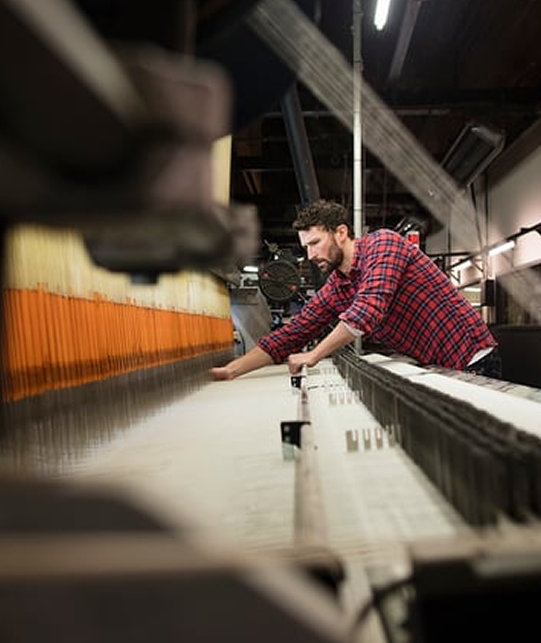
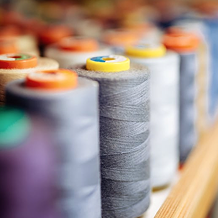
Textile margins often disappear in small gaps across material, processing, job work, wastage, and costing. Without connected tracking, these losses stay hidden until it’s too late.


See where margin is lost - by lot, machine, process, or party.

Track how material losses impact order cost and margin.

Yarn, processing, job work, and overhead costs roll into cost per metre, kg, or piece.

Compare the quoted vs. actual margin before the order is complete.
Disconnected spreadsheets cannot give you one connected operational picture.
Customer complaint on a fabric roll? Follow it back through the dye lot, machine, yarn lot and supplier in a few clicks.
Every stage has a standard. When actual crosses it, the right person is alerted, not after the month closes.
Yarn, dye, labour, job work and overhead roll into live order cost, so you can price with confidence.
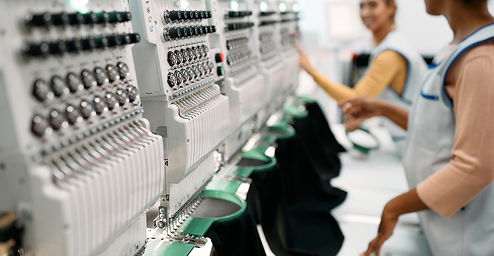


Count-wise yarn flow, loom efficiency, and beam planning.

Lot planning, shade control, and reprocess tracking.

Style BOM, cutting to stitching, line output.

Party-wise material ledger, billing on processed quantity.

Track stock by design and shade, manage orders, and monitor shipments

Manage counter sales, fabric inventory, barcode billing, and real-time store stock.
Sell fabric by meter, roll, piece, or configured unit.
Instantly identify fabrics and update stock during billing time.
See what each store and warehouse has in stock.
Manage fabric sales, barcode billing, meter-wise quantities, roll inventory, customer orders, and real-time stock from a single integrated POS system.
Monitor sales across multiple showrooms.
Manage customer orders and sales history.
Connect sales, payments, and accounts.

Live balance of material and WIP at every job worker.
Record output, shortage, and rejection against the original issue.
Record processed quantity, shortage, wastage, and rejection against the original issue.
From first call to running floor in 4 steps
Your counts, shades, units, and job workers set up.
Simple screens for operators, supervisors, and owners.
Hands-on support until the numbers match the floor.



Each role sees what it needs.
Profit by order, customer, and quality - from anywhere.
Plans, machine loads, and delays on one board.
Reorder alerts, GRN, lot, and shade-wise stock.
Inspections, defects, rejections, and reprocesses.
Material issued, received, pending, and shortage.
Costing, payables and receivables without manual matching.
We Understand Your Process Before We Configure Your ERP. Every textile business works differently. We understand your process first, then configure Odoo around your yarn, production, job work, quality, wastage, and costing workflows.

Textile-Focused Process Understanding

ERP Built Around Your Workflow

One Connected Business System

Practical Implementation Support

Scalable for Growing Textile Businesses
Your textile ERP shouldn't become another isolated system. Connect your core operations with the tools and services your business already depends on.



Connected financial records and reporting.

Support your invoicing and compliance workflows.

Connect to dispatch and documentation processes.

Track materials, rolls, and inventory faster.

Connect workforce data with business operations.

Connect sales channels and other business applications.

Bring payment and financial workflows closer to your ERP.
After training, this is what changed

“Earlier, production status was mostly followed up through calls and Excel. If I wanted to know what was pending on a particular order, I had to ask two or three people. After moving those processes into Odoo, I can see the production and stock position much faster. It has reduced a lot of the daily follow-up for me.”

“For us, the biggest issue was not billing or stocking alone. It was knowing where the material was between processing stages and what was actually completed. Earlier, job work and production updates were maintained separately. Now we can track the movement against the order and check pending quantities without depending completely on manual records.”

“Costing used to be something we checked after the order was completed. By then, changing the price or controlling the margin was difficult. With the new system, we can bring material, production, and job costs together while the order is running. It gives us a much clearer picture before the order goes out.”

Earlier, tracking production and material movement across different stages involved constant follow-ups and spreadsheets. With Odoo, we now have better visibility into production, inventory, and pending orders, making day-to-day operations much easier to manage.

Yes. It can manage spinning, weaving, knitting, dyeing, garment production, inventory, quality, costing, and job work.
Yes. Track materials by lot, batch, roll, shade, GSM, width, and quantity.
Yes. Track material issues, processed quantity, shortages, rejections, and job-work charges.
Yes. Compare standard and actual consumption to identify wastage and process losses.
Yes. Connect material, processing, job work, and other costs to calculate actual order profitability.
Yes. We understand your workflow first, then configure and customise Odoo around your business.
See how your own yarn, production, job work, inventory and costing processes can work inside one connected ERP system.