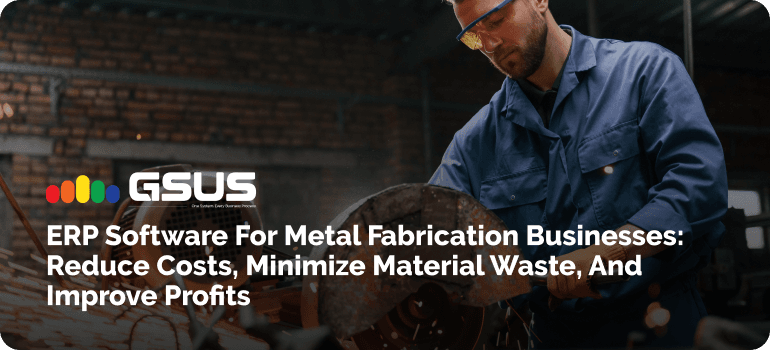
Ask any shop owner what keeps them up at night, and you'll hear the same things. Steel prices that jump between quotes. A cut that came out wrong.
A welder stands around because the brackets aren't ready. A rush order for plate you were fairly sure was already in the yard.
Each one is small. Together they chew through margin on nearly every job, and the worst part is that you often can't see it. Most fabricators we talk to run on spreadsheets, a separate accounting package, and a few people who just know where everything is. That holds until volume grows, or one of those people takes a week off.
That's the gap of ERP software for metal fabrication is meant to close. It ties material planning, production, purchasing, and accounting together, so the office and the shop floor read the same numbers.
Below we cover the usual problems, how to work out the return, and where Odoo fits. We're an Odoo partner, so we'll be upfront about that.
What Are the Biggest Operational Challenges in the Metal Fabrication Industry?
Managing Steel, Aluminium, and Sheet Metal Inventory Without Stockouts
The system says ten sheets of 3 mm (about 0.12 in) steel; the rack holds six, and a job stalls on Thursday afternoon. Or the count runs low, and someone orders what you already own. Weak sheet metal inventory management costs you in both directions.
Reducing Scrap and Material Waste During Cutting, Bending, and Welding
Offcuts, bad cuts, rework, and a batch of defective material. Nobody plans for these and few shops log them properly. A couple percent lost stainless or aluminium adds fast, so material wastage reduction starts simply seeing where it happens.
Tracking Work-in-Progress Across Multiple Production Stages
One job can pass through cutting, bending, welding and assembly in a week. Without live status, supervisors walk the floor to find it, and the customer asking where their order is gets a guess.
Calculating Accurate Job Costs for Custom Metal Fabrication Orders
A quote built on material price alone is mostly hope. Proper job costing metal fabrication includes labour, machine time, rework, and overheads. Leave them out and a job that looks profitable can quietly lose money.
Preventing Production Delays and Maintaining Material Traceability
Downtime and short material cause delays, sure. But more customers now also want traceability: which grade, which heat number, which order. Pulling that from paper travellers or someone's inbox is miserable.
How the Best ERP Software for Metal Fabrication Businesses Helps Reduce Costs and Waste
Connecting Inventory, Purchasing, Sales, and Production
When sales, purchasing, stores, and production share one database, nobody retypes the same order four times. That removes a surprising number of errors.
Improving Material Requirement Planning with Real-Time Stock Visibility
Good planning means looking at three things together: what production needs, what's on hand, and how long suppliers take. With all three visible, the system can suggest what to buy and when. You get fewer emergency purchases and less cash parked on surplus plates.
Tracking Material Consumption, Scrap, and Production Variances
Compare planned material against what was actually used, and patterns appear. A product that keeps eating more steel than its Bill of Materials says is either badly estimated or badly produced. Both are fixable once you can see them.
Automating Work Orders and Monitoring Production Costs
Work orders let each step, whether cutting, bending or welding, record its time, machine hours and material. Those feeds manufacturing cost control as the job moves, instead of surprising you at invoicing.
How Odoo ERP Helps Manufacturers Improve Material and Production Control
Odoo ERP for metal fabrication brings Manufacturing, Inventory, Purchase, Quality, Maintenance and Accounting onto one platform, with Bills of Materials, work orders, scrap recording and reordering rules. How it's set up depends on your processes and integrations, which is why we assess the shop before promising anything.
How Metal Fabrication ERP Software Reduces Material Waste and Improves Yield
Tracking Sheet Metal from Raw Material to Finished Components
Raw material tracking means every receipt, transfer, and use is recorded. When someone asks where a sheet went, you can follow it from supplier to finished part.
Recording Scrap, Offcuts, and Remnants
Not every leftover is scrap. A decent remnant might suit the next job. Log remnants separately, and they stay visible instead of getting written off.
Comparing Planned Material Consumption with Actual Usage
Production reports show repeat offenders: one machine, operator, or product line using more than planned. Repeat variances usually mean a wrong estimate or a clumsy process, not bad luck.
Connecting ERP With Cutting and Nesting Software
Let's be straight: an ERP doesn't calculate the best cutting layout. That's the job of specialist Metal Cutting Optimization Software. The ERP supplies the orders, material and records around it, and when the two connect, yield improves.
How to Calculate ERP ROI for a Metal Fabrication Business
Before judging any ERP software for metal fabrication, set up a baseline. You can't prove savings against numbers you never measured.
Measure Savings from Reduced Scrap and Emergency Purchases
Pull twelve months of scrap value, rush purchases, and expediting charges.
Compare Quoted Job Costs with Actual Production Costs
Then compare quotes against actual cost on recent jobs: material, labour, machine time, rework, overheads. The gap shows whether quoting or production is leaking.
Estimate Potential ERP Savings with a Practical Example
These figures are hypothetical, just to show the method. Say a shop spends 1,000,000 a year on material and loses about 5% to avoid scrap and emergency buying, roughly 50,000. Better tracking trims by a fifth: 10,000. Add 20,000 from less rework and 30,000 from fixing under-quoted work, and the yearly benefit is 60,000. Your results will depend on your current processes and implementation.
Calculate ERP Return on Investment
ROI (%) = (Net Financial Benefit ÷ Total ERP Investment) × 100
Net benefit is the gain minus relevant implementation and running costs, without counting any saving twice. With a 40,000 investment: (60,000 − 40,000) ÷ 40,000 × 100 = 50%.
What Are the Essential ERP Features for Metal Fabrication Companies?
When comparing ERP software for metal fabrication, look at what each feature does for the business.
Manufacturing, MRP, Bills of Materials, and Work Orders
Bill of Materials (BOM) management defines what each part needs. Together with MRP and work orders, it turns a customer order into a clear production plan.
Inventory and Warehouse Management for Steel and Aluminium
Location tracking, units of measure and lot control mean the right sheet or profile is found quickly, and stock counts match reality.
Purchase and Supplier Management
Supplier lead times, price history and automated reordering reduce stockouts and weaken the habit of buying “just in case.”
Quality Inspection and Material Traceability
Recording inspections and lot or heat numbers supports audits and customer complaints. You can trace a defect back to a batch rather than guess.
Machine Maintenance and Production Scheduling
Preventive maintenance reduces surprise breakdowns. Production scheduling then plans around machine availability, which keeps delivery promises realistic.
Sales, Job Costing, Accounting, and Financial Reporting
When quotes, orders, invoices and costs connect, you can see profit per job, not just overall turnover.
Integration With CAD, CAM, CNC, and Nesting Software Where Required
Fabricators often rely on specialist design and cutting tools. Integration avoids double entry and keeps CNC machine production planning aligned with orders.
How to Choose Odoo ERP for Your Metal Fabrication Business
Check Whether Odoo Fits Your Fabrication Workflow
List how you work: make-to-order jobs, routings, work orders, subcontracting, job tracking. If your process is highly unusual, test it against Odoo before committing. Good ERP software for metal fabrication should adapt to you, not the reverse.
Review Odoo Manufacturing and Inventory Capabilities
Odoo Manufacturing handles BOMs, work centres and work orders. Odoo Inventory and Purchase connect stock and procurement to those orders.
Identify Customisation and Integration Requirements
Ask early about CNC connectivity, nesting tools, your current accounting system and any custom workflows. These drive both scope and cost.
Evaluate Implementation Costs, Training, and Support
Licences are only part of the bill. Consider training, data migration, support, and how well your team will actually adopt the system. Ask the implementation partner about real manufacturing experience.
Why Choose Odoo ERP for Metal Fabrication Businesses?
Connect Manufacturing, Inventory, Purchasing, Sales, and Accounting
Modules share one database, so departments stop maintaining separate versions of the truth.
Support Job-Based and Make-to-Order Manufacturing
Configured BOMs, work orders and routes can handle different fabrication jobs, from one-off bracket to repeat production.
Improve Production and Financial Visibility
With records updated as work happens, managers can review material usage, job progress and profitability without waiting for month-end reports.
Work With an Experienced Odoo Implementation Partner
Software configured without understanding your shop floor gets ignored by operators. A partner who studies your workflow first makes adoption far smoother.
How Odoo Supports End-to-End Metal Fabrication Manufacturing
Odoo Manufacturing: Manage Bills of Materials, Work Orders, and Routing
Defines what gets built, in which steps, and at which work centre.
Odoo Inventory: Track Raw Materials, Stock Movements, and Finished Goods
Logs every receipt, transfer and consumption, including lots where traceability matters.
Odoo Purchase: Plan Steel and Aluminium Procurement
Turns demand into purchase orders, using supplier information and lead times.
Odoo Quality: Record Inspections and Production Defects
Captures checks and defects at defined points, so quality data isn’t trapped on paper.
Odoo Maintenance: Plan Preventive Maintenance for Production Equipment
Schedules servicing for presses, lasers and welders to limit unplanned downtime.
Odoo Accounting and Sales: Connect Job Costs, Quotations, Orders, and Invoicing
Links to the commercial side to what production spent.
How GSUS Helps Implement Odoo ERP for Metal Fabrication Without Disrupting Production
ERP projects go better when they start with how the factory really operates. If the system is configured without that understanding, it creates confusion instead of solving problems.
At GSUS Star Software Solutions, an Odoo Partner, we begin by reviewing your production stages, inventory habits, purchasing and job costing.
From there we set up products, BoMs, work centres and manufacturing routes around the requirements we've agreed with you. Before going-live we validate your inventory records and test the workflows that matter most, and we train the production, warehouse, purchasing and accounts teams on their part of the system.
After go-live we keep an eye on stock accuracy, material waste, job-cost variance and on-time delivery.
Some businesses do well with a phased rollout, depending on how complex their operation is. The aim is a transition you can manage while production keeps running.
How Much Does Metal Fabrication ERP Software Cost?
The cost of ERP software for metal fabrication companies depends on a few things: the number of users, the apps you need, customisation, third-party integrations, data migration, training, hosting, and ongoing support.
A factory with simple production flows needs a different scope from one running several stages, subcontracting, tight material traceability and specialised machine integrations.
So don't compare software prices alone. Work out the total cost of ownership and ask which operational problems the system needs to solve.
Not sure what ERP implementation might cost you? Try the GSUS ERP Cost Calculator for an initial estimate based on your requirements.
Treat it as a starting point for budgeting, then talk through your processes, integrations and needs with an ERP consultant. The final cost can change once the project's scope is confirmed.
Improve Metal Fabrication Cost Control with the Right ERP System
Cutting material waste and improving profit costs more than buying steel at a good price. You need accurate inventory records, dependable production planning, clear job costing, and a view of what's causing delays and rework.
The right ERP system pulls those threads together and helps managers decide with better information.
Odoo is worth a proper look when its manufacturing features, configuration options and integration possibilities fit what your factory needs. Before choosing any ERP software for metal fabrication, review how your shop actually runs today.
GSUS Star Software Solutions can help you assess your workflows and see how Odoo can support your business.
Planning to reduce material waste and improve production control? Talk to Odoo Implementation Partner about an Odoo ERP assessment for your metal fabrication business.